Houghton Mill
☕ Café🏰 History🥾 Walk🏛️ Museum⚓ Canal or Waterside📍 Landmark 👪 Child friendly · All ages🐕 Dogs on a lead♿ Partly wheelchair accessible
A working 18th-century National Trust watermill on the River Great Ouse, producing stoneground flour amid scenic Cambridgeshire water meadows.
Houghton Mill is an 18th-century timber-framed watermill on the River Great Ouse in Cambridgeshire, situated in the village of Houghton between Huntingdon and St Ives. Owned by the National Trust and Grade II* listed, it is the last complete working flour mill surviving on the Great Ouse.
Mills have stood on this island site since at least 974, when Ramsey Abbey held the estate and required local farmers to grind their grain here. Relations were not always tranquil: in 1500 the abbot dammed the river to boost water power, causing a flood in the village that sparked a riot and the theft of the mill's floodgates. The present weatherboarded mill replaced an earlier building and was extended across the 18th and 19th centuries. Its best-known Victorian miller was the nonconformist Potto Brown (1797–1871), so devoted to his faith that he brought his business ledgers to family prayer meetings to discuss his debtors with God; a bronze bust of him still presides over the nearby village green. After commercial milling ceased, local villagers rallied to buy the building in the 1930s and presented it to the National Trust in 1939.
Inside, three floors of historic machinery display the mechanics of traditional milling. Visitors can watch the heavy waterwheel turn and feel the building vibrate as the grindstones mill wholemeal flour, milled from wheat grown at the National Trust's Wimpole Estate and packaged for sale in the shop. An electric millstone system installed in 2013 allows milling demonstrations to continue even during dry periods when the river level drops.
The watermill opens from March to October, offering pre-booked guided tours on Wednesdays and self-led visits on Saturdays. A riverside tea-room is open year-round serving homemade cakes, hot drinks, snacks, and light lunches, with outdoor seating alongside the mill pond. Dogs are welcome on leads across the grounds and meadows, though only assistance dogs may enter the mill and tea-room. Most visits to the mill and tea-room take between one and two hours.
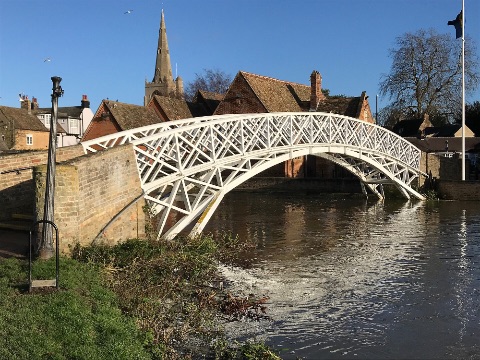
The mill also makes an excellent starting point for exploring the Ouse Valley Way. A gentle 1.8-mile circular walk leads over wooden bridges across the water meadows to the opposite bank at Hemingford Grey, passing views of its 12th-century manor house before returning along quiet village lanes.
Sources & further reading
Links to other websites (the place's own site, CAMRA, Tripadvisor, map directions and sources) open in a new tab. We don't run those sites and aren't responsible for their content, so please check opening times, prices and access with the place before you travel. More about links