St Augustine's Abbey
🏛️ Museum🏰 History⛪ Church📍 Landmark 👪 Child friendly🐕 Dogs on a lead♿ Partly wheelchair accessible🍦 Snacks
The ruins of England's first Anglo-Saxon monastery, founded by St Augustine in 598, with a museum telling its story.
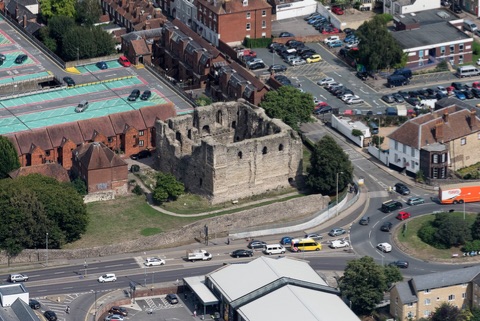
St Augustine's Abbey lies on Longport, just outside Canterbury's old city walls to the east, with views from the ruins to the cathedral. It was founded in AD 598 by St Augustine, sent from Rome by Pope Gregory I, on land given by King Æthelberht of Kent, and it was the first monastery in Anglo-Saxon England. Together with Canterbury Cathedral and St Martin's Church it forms a UNESCO World Heritage Site, inscribed in 1988.
The first church was consecrated in 613, and the abbey was meant as a burial place for abbots, archbishops and the kings of Kent. Æthelberht, his son Eadbald, Archbishops Justus, Mellitus and Theodore of Tarsus were all buried here, and Augustine's own grave site is here too. Dunstan added Augustine's name to the dedication in 978. After 1066 the Normans swept away the Anglo-Saxon buildings and by 1100 had replaced them with a Romanesque monastery, rebuilt again after a great fire in 1168. The abbey surrendered to Henry VIII's commissioners on 30 July 1538, and part of it became a royal residence; Elizabeth I stayed in 1573. Later owners sold off and dismantled much of the stone, and a brewery once operated on the site. In the 19th century Alexander Beresford Hope bought the ruins and St Augustine's Missionary College was founded, and today the King's School uses the college buildings. The ruins came into state care in 1940.
You walk among the excavated foundations and standing walls of the successive churches and monastic buildings, and a site museum traces the abbey's history from its foundation to the Tudor palace. An audio guide is included with admission, and there are games for children.
The museum houses the toilets, including accessible ones and baby changing, and the gift shop sells hot and cold drinks, snacks and ice creams; there is no café. Picnics are welcome, with benches around the ruins and tables outside the museum. Dogs on leads are allowed in the grounds. Pushchairs are welcome, though rough ground and steps make parts of the site harder going. There is no parking on site, but there is a paid car park opposite, not run by English Heritage, and Canterbury West station is about a mile away. Entry is paid, with English Heritage members free. Opening days vary through the year, so check the English Heritage website before you go.
St Augustine's Conduit House, which supplied the abbey with water, is close by, and the cathedral is a short walk into the city.
Sources & further reading
Links to other websites (the place's own site, CAMRA, Tripadvisor, map directions and sources) open in a new tab. We don't run those sites and aren't responsible for their content, so please check opening times, prices and access with the place before you travel. More about links