Cape Cornwall
🔭 Viewpoint🎬 Film and TV Locations🥾 Walk🌊 Coast 👪 Child friendly · All ages🐕 Dogs on a lead🚫 Not wheelchair accessible🆓 Free entry☕ Café
Rugged National Trust headland near St Just where Atlantic currents divide, crowned by a 19th-century mine chimney.
Just over a mile west of St Just and four miles north of Land's End, Cape Cornwall is a rugged headland jutting into the ocean where two great bodies of water meet. Until the first Ordnance Survey in the early 19th century, it was believed to be the most westerly point in Cornwall. Today, the headland is cared for by the National Trust and forms part of the Tin Coast and the Cornwall and West Devon Mining Landscape UNESCO World Heritage Site.
Tin was worked intermittently at Cape Cornwall Mine between 1838 and 1883, and its prominent chimney stack near the peak was retained after closure as a navigational marker for ships. In 1907, De Beers chairman Francis Oats built Porthledden House beside the cape (which remains private) and converted the mine's former ore sorting floors into greenhouses and wineries. In 1987, the H. J. Heinz Company bought the headland to mark a century of UK operations and gifted it to the nation, commemorated by a Heinz Baked Beanz label-shaped plaque at the base of the chimney. Cape Cornwall also appeared on screen in the 1962 film Night of the Eagle.
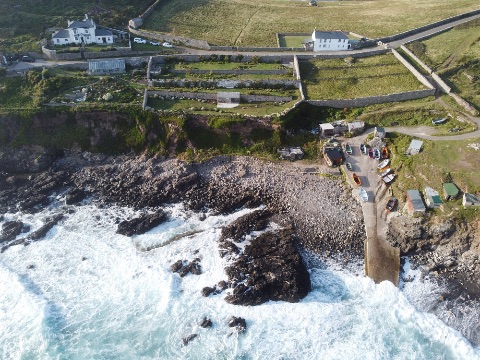
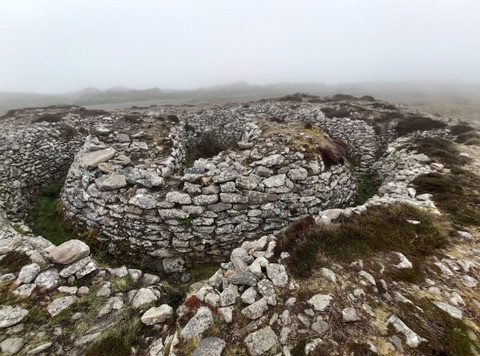
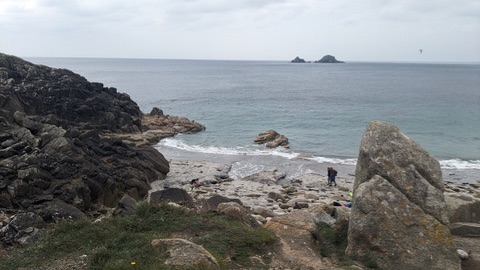
Away from the chimney stack, the remains of medieval St Helen's Oratory stand on the landward side of the promontory, marking the site of a 6th-century church. About a mile southwest, the twin offshore rocks of The Brisons serve as a breeding colony for gannets, fulmars and storm-petrels, and form the starting line for an annual swim into neighbouring Priest's Cove, where local fishermen still launch from the slipway. In late spring, bluebells carpet the clifftops, and walkers often spot choughs, seals and dolphins.
The headland is open from dawn to dusk, with a National Trust pay-and-display car park, public and accessible toilets, and the independent Little Wonder Café serving drinks, cakes and snacks from March to October. Paths up the cape are steep, rough and uneven with unguarded cliff edges and old mine shafts, so children need close supervision and dogs must be kept on leads (with a seasonal dog ban on Priest's Cove beach and slipway from Easter Sunday to 30 September). From the car park, the South West Coast Path leads south towards Sennen Cove or north past Kenidjack Valley and Botallack towards Pendeen Lighthouse.
Sources & further reading
- National Trust - Cape Cornwall National Trust
- Cornwall Beach Guide cornwallbeachguide.co.uk
- National Trust – Exploring Cape Cornwall National Trust
- National Trust – St Just to Cape Cornwall walk National Trust
- Wikipedia – Cape Cornwall Wikipedia
- Wikipedia – Cape Cornwall Mine Wikipedia
- Wikipedia – Cornwall film locations Wikipedia
Links to other websites (the place's own site, CAMRA, Tripadvisor, map directions and sources) open in a new tab. We don't run those sites and aren't responsible for their content, so please check opening times, prices and access with the place before you travel. More about links