Pinhay Bay
🏖️ Beach🌿 Nature🌊 Coast 👪 Child friendly · 8+🚫 Not wheelchair accessible🆓 Free entry
Remote Devon bay west of Lyme Regis, reached at low tide with Triassic, Jurassic and Chalk fossils.
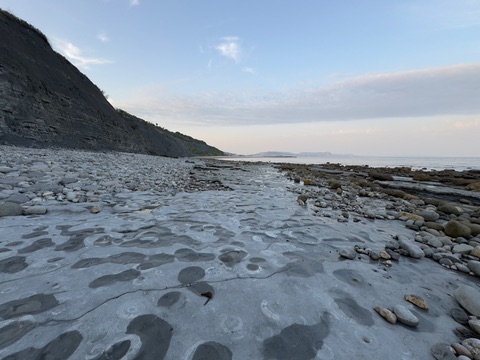
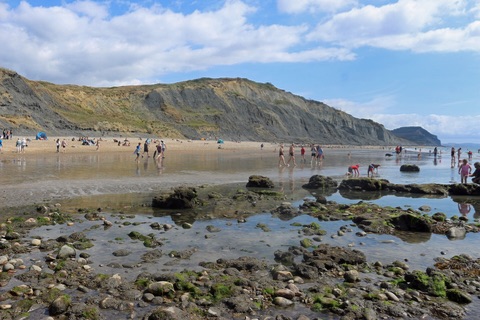
Pinhay Bay sits on the south coast of Devon about 1.2 miles southwest of Lyme Regis and 3.7 miles east of Seaton, taking its name from the nearby inland hamlet of Pinhay. It forms part of the Axmouth to Lyme Regis Undercliffs Site of Special Scientific Interest and National Nature Reserve.
Geologically, Pinhay Bay brings together rocks from the Triassic, Jurassic and Cretaceous periods in one stretch of coast. Beds of Triassic White Lias and Jurassic Blue Lias meet younger Cretaceous Greensand and Chalk along the cliffs and foreshore.
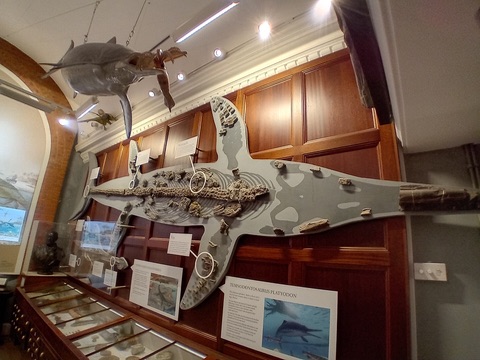
Sea urchins from the Chalk are among the most common fossil finds, alongside Blue Lias ammonites and Jurassic bivalves. Large ammonites can appear on the wave-cut platform and ledges when the beach scours, and must be left in place rather than hammered or removed.
The bay is reached by a long walk west along the foreshore from Monmouth Beach in Lyme Regis, round the headland at Chippel Bay, over rough, uneven ground with boulders, large pebbles and shingle. Only go on a falling tide with plenty of time to get back, keep well away from the unstable cliffs and landslips, and note that the walk and terrain suit older children with supervision. Follow the Undercliffs Fossil Collecting Code by taking only loose foreshore material and leaving visible water-worn ammonites and ledges intact.
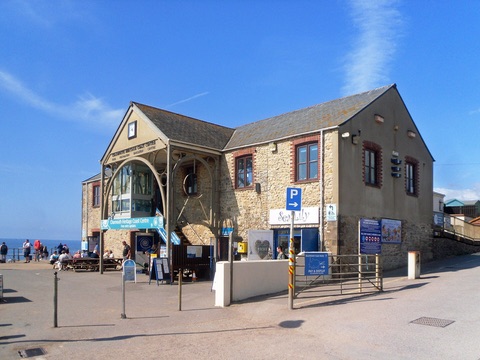
Park at the short-stay Monmouth Beach Car Park in Lyme Regis (DT7 3LE) and walk across to the foreshore to start the route.
Sources & further reading
Links to other websites (the place's own site, CAMRA, Tripadvisor, map directions and sources) open in a new tab. We don't run those sites and aren't responsible for their content, so please check opening times, prices and access with the place before you travel. More about links