The Crocodile, Mond Laboratory
🎨 Public Art🏰 History💎 Hidden gem 🆓 Free entry
Eric Gill's brick carving of a crocodile on Cambridge's Mond Laboratory, Pyotr Kapitza's tribute to Ernest Rutherford.
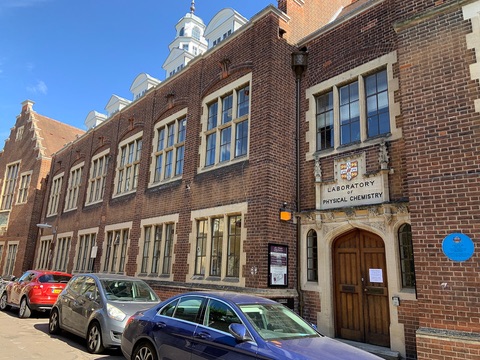
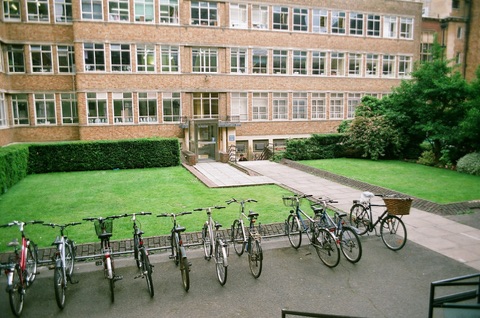
Set just off Free School Lane in central Cambridge, the Crocodile is a relief carving on the outer brick wall of the Grade II listed Royal Society Mond Laboratory. The laboratory was built in 1932–33 to designs by H. C. Hughes with funding from the Royal Society, creating a purpose-built space on the New Museums Site for low-temperature and strong-magnetic-field research.
The laboratory's first head, Russian physicist Pyotr Kapitza, commissioned the sculptor Eric Gill to carve the crocodile into the exterior brickwork. The animal was Kapitza's affectionate nickname for his mentor, Ernest Rutherford. Kapitza later explained the crocodile as a symbol of fatherhood and respect, though Cambridge lore also links it to Rutherford's booming footsteps echoing down the corridors like the ticking crocodile in Peter Pan.
The carving can be viewed from the courtyard inside the New Museums Site, entered through the historic Old Cavendish Laboratory archway on Free School Lane. There is no charge to look at the exterior wall, and it is easy to combine a quick stop here with a visit to the nearby Whipple Museum of the History of Science on the same street.
Sources & further reading
Links to other websites (the place's own site, CAMRA, Tripadvisor, map directions and sources) open in a new tab. We don't run those sites and aren't responsible for their content, so please check opening times, prices and access with the place before you travel. More about links